


Discover how meticulously designed software architecture optimises cloud data storage and processing for modern mobile apps.
Key Takeaways
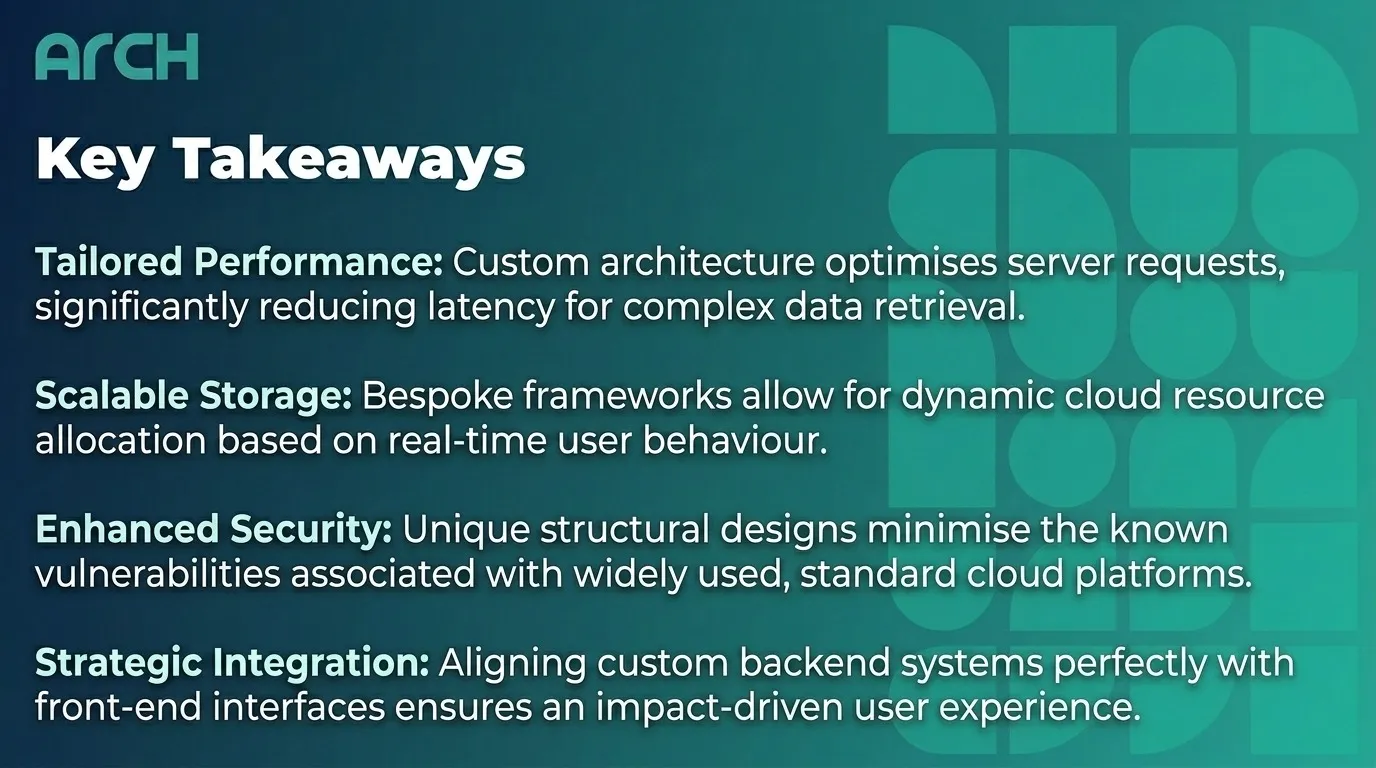
- Tailored Performance: Custom architecture optimises server requests, significantly reducing latency for complex data retrieval.
- Scalable Storage: Bespoke frameworks allow for dynamic cloud resource allocation based on real-time user behaviour.
- Enhanced Security: Unique structural designs minimise the known vulnerabilities associated with widely used, standard cloud platforms.
- Strategic Integration: Aligning custom backend systems perfectly with front-end interfaces ensures an impact-driven user experience.
The Shift Towards Custom Cloud Infrastructure
Modern mobile applications face unprecedented demands for speed, security, and seamless user experiences. As data requirements grow exponentially, off-the-shelf backend solutions increasingly struggle to maintain peak operational efficiency. To remain competitive, enterprises are shifting towards meticulously designed custom software architecture.
This strategic approach fundamentally changes how mobile platforms interact with cloud-based environments. By replacing generic frameworks with bespoke structural blueprints, organisations can dramatically enhance performance. The result is an impact-driven digital ecosystem capable of handling complex cloud data storage and real-time processing with ease.
Overcoming Standardisation Limitations
For years, developers relied heavily on standard Backend-as-a-Service (BaaS) platforms to manage cloud storage. While these out-of-the-box solutions offer convenience, they often introduce severe bottlenecks when applications scale. Standardised APIs force mobile apps to make multiple inefficient requests to process fragmented data sets.
Custom software architecture solves this by streamlining the communication protocols between the mobile client and the cloud server. Engineering teams can design precise data pipelines that aggregate necessary information into a single, optimised payload. This meticulous approach significantly reduces bandwidth consumption and accelerates synchronisation speeds.
When investing in comprehensive website and app development, strategic partners prioritise these tailored architectural decisions. A custom framework ensures that the underlying database structure aligns perfectly with the specific logic and behaviour of the application. Consequently, businesses achieve higher reliability and a noticeable reduction in cloud hosting expenditures.
Optimising Data Processing at the Edge
The way modern applications process information is shifting closer to the end user. Traditional models require mobile devices to send raw data to a central cloud server for analysis, causing inherent latency. Custom architecture allows developers to integrate edge computing capabilities directly into the mobile ecosystem.
By handling preliminary data processing locally on the device or at a nearby edge node, applications drastically reduce the load on primary cloud servers. This ensures only essential, pre-processed data is transmitted for long-term storage and advanced analysis. Such a framework is vital for latency-sensitive functions like real-time analytics and augmented reality.
Furthermore, this hybrid processing model ensures uninterrupted functionality even during unstable network conditions. Custom offline-first architectures allow mobile applications to cache data securely and synchronise with the cloud seamlessly once a connection is restored. This resilience is a defining characteristic of meticulously designed, enterprise-grade software.
Enhancing Security Through Bespoke Solutions
Generic cloud configurations often present well-documented attack vectors, making them prime targets for malicious actors. When thousands of applications share the exact same structural foundations, data breaches become a statistical inevitability. Custom software architecture provides a robust defence mechanism through structural obscurity and tailored security protocols.
By engineering bespoke authentication workflows and data encryption methods, developers can protect sensitive information more effectively. Custom architecture allows for the implementation of field-level encryption, ensuring that data remains secure both in transit and at rest within the cloud. This tailored approach is crucial for industries handling sensitive financial or health records.
Ultimately, replacing generic dependencies with proprietary structural designs grants organisations total governance over their digital assets. This proactive, impact-driven security posture not only protects end-users but also simplifies compliance with stringent international data protection regulations.
Conclusion
The transition towards custom software architecture marks a pivotal evolution in mobile technology. By moving away from restrictive, one-size-fits-all cloud solutions, organisations can unlock unprecedented levels of performance and scalability. This strategic shift is no longer a luxury, but a necessity for sustaining digital growth and operational excellence.
Investing in a meticulously designed structural foundation ensures that mobile applications remain resilient, secure, and highly efficient. As cloud computing continues to advance, the seamless synergy between tailored backend architecture and mobile functionality will define the next generation of industry-leading applications.
Frequently Asked Questions
What is custom software architecture in mobile development?
It involves designing a unique, foundational software structure tailored specifically to an application’s operational requirements, rather than relying on generic, pre-built backend templates.
How does custom architecture improve cloud storage?
It optimises how data is structured, requested, and stored, thereby reducing unnecessary API calls and allowing for more efficient, cost-effective use of cloud resources.
Why is bespoke architecture considered more secure?
Custom frameworks eliminate the shared vulnerabilities found in widely used off-the-shelf platforms, allowing engineers to integrate unique, rigorous defence and encryption protocols.
Sources
- IBM: The Business Value of Custom Cloud Architecture
- Gartner: Evaluating Software Architecture for Mobile Ecosystems
- AWS Case Studies: Custom Architecture Performance Metrics
- Forrester: Security Benefits of Bespoke Application Design
